
Game-based learning: effective learning about climate
At EVRgreen Studio, we are committed to a greener world by promoting sustainable behavior. Gamification and serious games are an effective strategy to motivate and engage people in sustainable initiatives. Game-based learning, we call it. All those terms, that’s sometimes quite confusing. That’s why in this blog we discuss the differences and delve deeper into the effectiveness of game-based learning.

How about this?
Game-based learning is not quite the same as serious games or gamification. In gamification, you add game elements to an environment that is not actually a game. This makes it more interactive because your activity is directly rewarded. For example, you can earn points or badges by solving problems, completing a nature route or (teaching) assignments correctly. And that motivates!
A serious game goes a step further. This is a complete game that involves more than just fun, namely: informing, training or teaching the player. This does not mean that serious games are not fun, quite the contrary! A serious game can be a card or board game, a computer game or a game on your phone. Fun and education are combined. Accepting the challenge and winning gives you a satisfied feeling, and that makes you want more. This keeps learning fun and gets you more involved.
So the difference with game-based learning is that this describes a learning method that uses play. A way of learning through play, using serious games.
Effective learning about climate
That learning through play works well has been shown many times in studies and research. But serious games and gamifications are also a proven effective strategy for learning about climate, because information is also stored well in this form – sometimes even better. In fact, there is a big difference between reading about climate change and experiencing it for yourself through a game.
One of the greatest features of serious games is their ability to encourage behavior change in a positive and playful way. This can be applied to a variety of topics, from entrepreneurship to jungle animals and from farming to litter. By having fun with the game and the learning process, you not only become more engaged, you are more likely to modify your own behavior. Perhaps as a company you will become more sustainable, or children will want to help clean up litter.
With games, of course, you can reach a completely different audience, especially children and adolescents. This target group is generally less inclined to read about nature and climate change, even though they find it an interesting topic. Playing a game is fun, so you are more likely to be motivated to keep playing it. Learning or training through a serious game also makes the whole learning experience more personal, because you are responsible for the solutions you come up with in the game or for the success of the challenges you face. Thus, children and youth continue to learn about climate in a creative and approachable way. At home, in the classroom, or outside!
Polar bear in the classroom
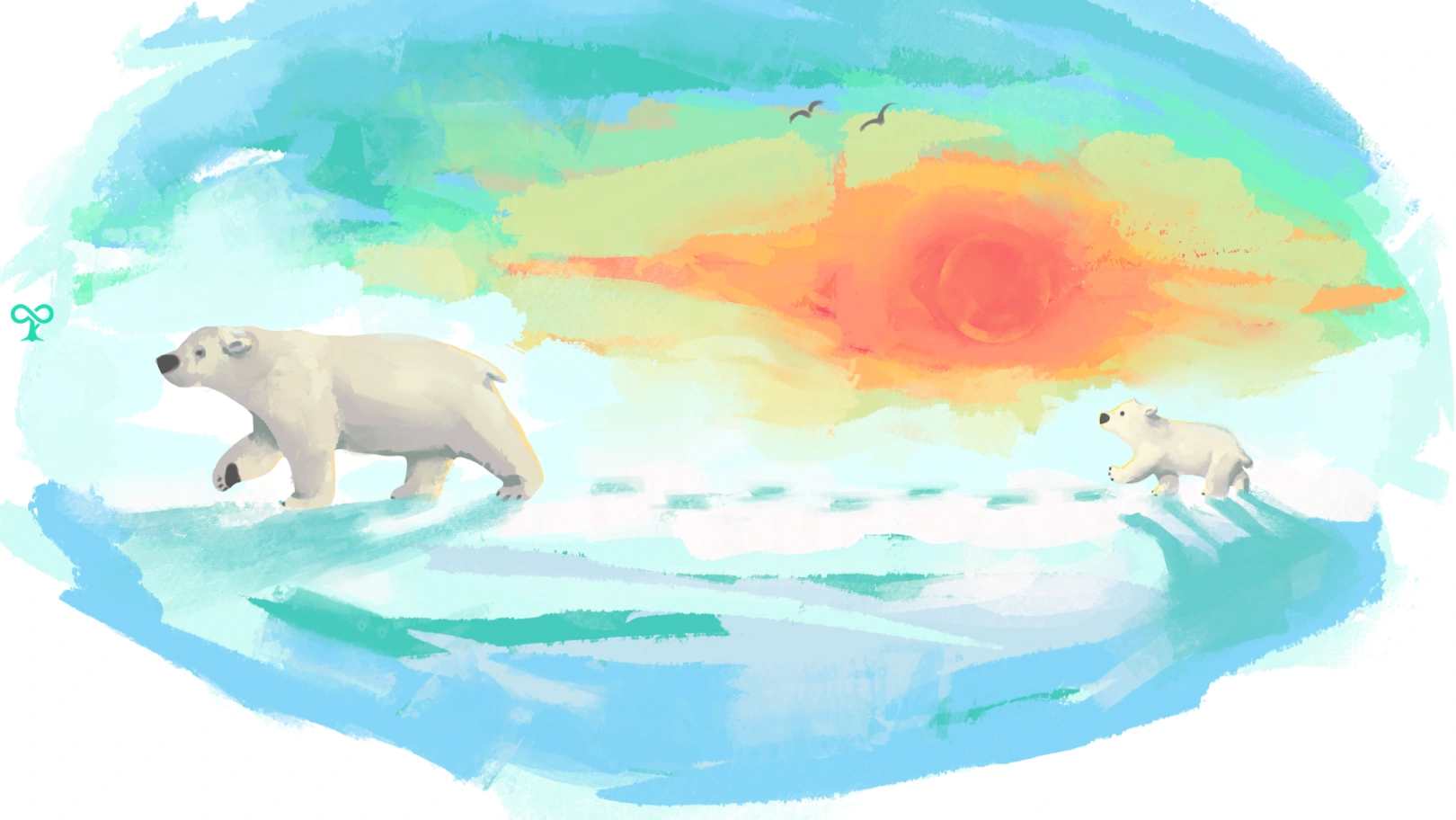
Especially for elementary school, we have developed a wonderful teaching package using augmented reality: Zubo the polar bear. Together with Zubo, children learn about the life of the polar bear through interactive stories and questions. In the process, they are encouraged to come up with and work out their own ideas, and it works!