
Competition and comparison – how social interaction motivates us for sustainability
This blog series is a collaboration between Green Nudges Consulting and EVRgreen Studio, combining creative storytelling with behavioural science to drive sustainable change. Hosted on the EVRgreen Studio website, the series explores smart, human-centred nudges that make sustainable choices easier and more engaging.
Each article features examples from the Green Nudges platform: our free, public collection of real-world interventions designed to shift behaviours for the better. From gamification to subtle prompts, these nudges highlight how small design choices can unlock big impact.
This first blog is about how social interaction motivates us to act more sustainably, and how competition and comparison play a role in this.

🧠Tapping into psychological mechanisms
Think of the atmosphere in a football stadium on match day. Tens of thousands of fans, all dressed in team colours, chanting, singing, and living every pass of the ball. That deep sense of belonging to a team drives people to travel across countries, brave cold winter nights, and celebrate – or despair – together. It’s more than just a game; it’s identity.
The same psychology applies far beyond sport. Humans are wired to compare, compete, and take pride in group achievements. This is what makes competition such a powerful tool in sustainability.
In this series of blog articles, we highlight psychological interventions from the iconic Green Nudges series for EVRgreen Studio to showcase how gamification taps into psychological mechanisms to make sustainability fun. This first article dives into competition and social comparison, fueling green behavior beyond sports and music.
⛏️NK Tegelwippen
Our first example is from the Netherlands, where EVRgreen Studio is actually from. Everyone who knows the country understands that there is a friendly rivalry between the Dutch and Flemish people – and a climate change mitigation campaign taps right into the social dynamics between the groups:
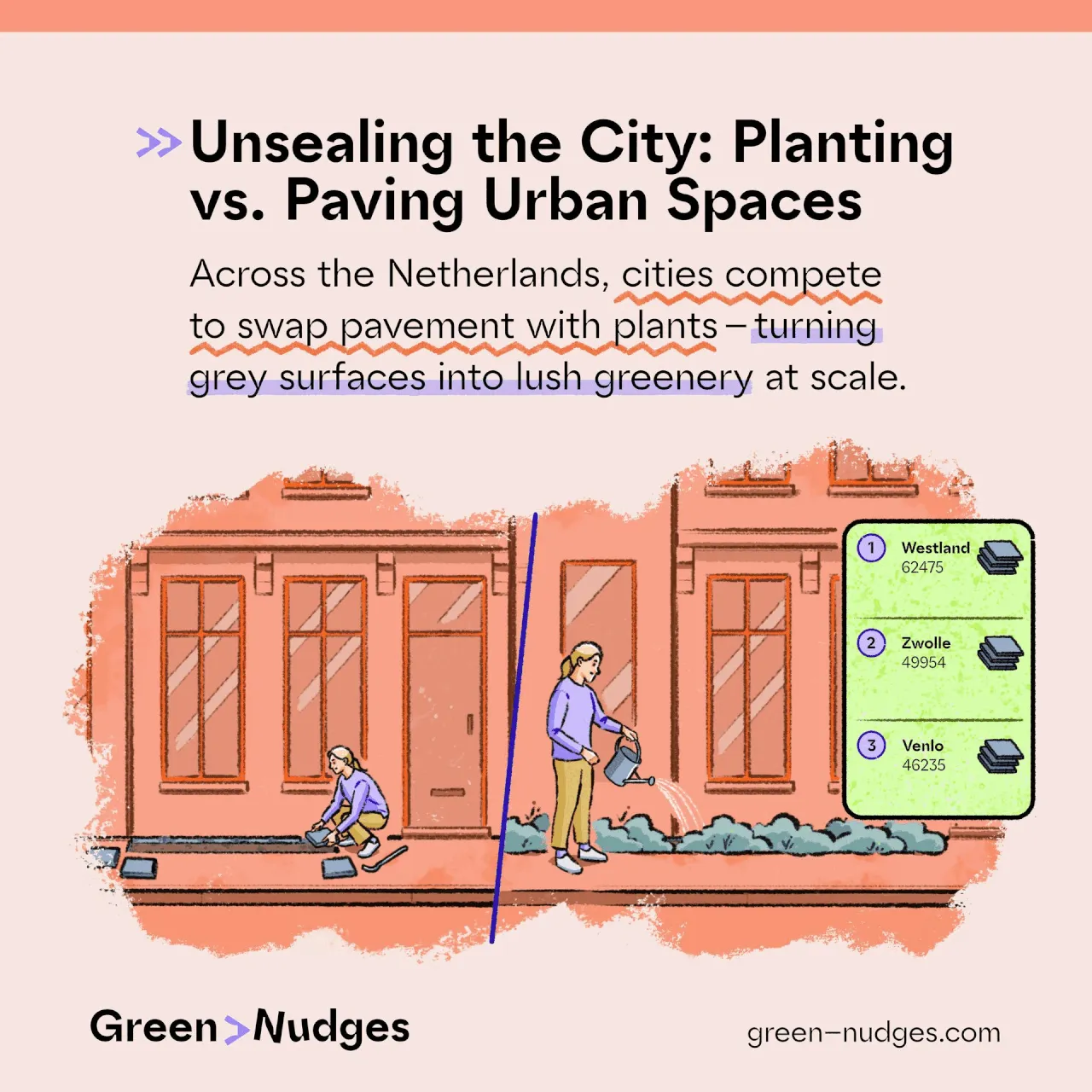
‘NK Tegelwippen’ (translates to ‘flipping tiles’) invites cities to compete by tearing up paving stones and replacing them with greenery. Residents proudly rally for their neighbourhood, checking live leaderboards to see their city climb the ranks.
This way NK Tegelwippen has become a national movement involving over 150 cities. In 2023 alone, more than 4 million paving stones were removed, creating green spaces that improve biodiversity and reduce urban heat. Who wins in the end? Team “Oranje” or “Vlaams” – we would say everyone wins!
The Coldplay wristbands 🌈
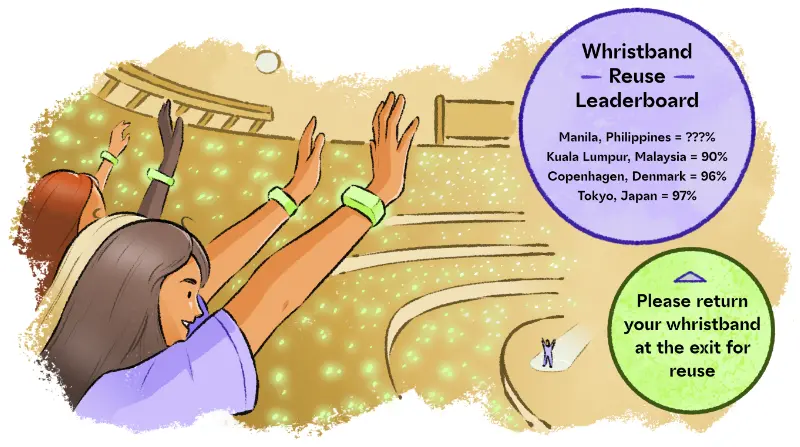
The second example is for music lovers: the infamous band Coldplay is committed to reduce the environmental footprint of its concerts, and even though LED wristbands contribute to a beautiful concert atmosphere and are made from 100% compostable material, they can become a pollutant if concert goers turn them into souvenirs.
To avoid this, Coldplay also uses a playful competition: which city can return the most wristbands after the show? Cities with the highest return rates are highlighted on Coldplay’s social channels, creating a sense of collective achievement. Fans not only feel part of the concert, but part of a broader sustainability effort that transcends the event itself.
Does it always have to be competition, though? No, sometimes a sense of “we are in this together” works just as well. Like in the US, where the Cool Choices card game is played within workplaces or communities. It lets teams earn points for sustainable actions, like biking to work, reducing water usage, or avoiding single-use plastics. Teams track their collective scores online, making small actions tangible and meaningful. This helps avoid the feeling of individual actions being just a drop in the ocean. Also, top performers are celebrated publicly, which enhances peer-driven motivation and feeds right into the green team culture the companies want to create.
Behavioural science explains why this works:
- Social comparison motivates us when we see others taking action. Visible metrics, like leaderboards or shared progress updates, make sustainability measurable and create a subtle form of peer pressure.
- Group identity creates loyalty to “our team,” whether that’s a city, a workplace, or a circle of friends. When sustainable actions are framed as team achievements, individuals are more likely to participate because success reflects positively on their own identity.
- Visibility through leaderboards or point tallies adds pride and accountability.
- Emotional rewards and collective pride. Beyond numbers, competition taps into intrinsic motivators like joy, pride, and belonging. Celebrating collective milestones, e.g., “Our city just hit 10,000 removed stones!” transforms sustainability into a shared success story rather than a personal sacrifice.
Final thoughts: By adding a spirit of competition, sustainability initiatives can create loyalty, pride, and momentum that facts alone rarely achieve. So we say: "Go, Green Nudges, Go!"
🌅 What's next?
This first blog is just the start. In the next couple of blogs, we’ll continue diving into each pathway with real-world examples and practical insights:
Blog 1: Competition and comparison – how social interaction motivates us for sustainability
Blog 2: Progress and reward – how tangibility, levels, and vouchers make us do the right thing
Blog 3: Playful design – making sustainability fun, and full of dopamine and positive emotions
Gamification shows us that climate action doesn’t have to be heavy - it can be light, fun, and motivating. And when more people play along, the planet wins.
👉 Could your community or organisation launch its own “green derby”? Share your thoughts with us:
hello@green-nudges.com and ⬇️
We look forward to getting in touch.
Do you have questions, want to share ideas or just get to know us? We'd love to hear from you! Please contact us at info@evrgreenstudio.com, please call +31644290684 or use the contact form below.